
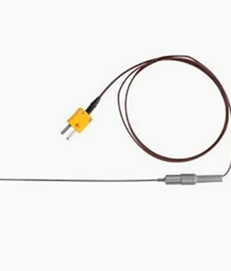
Description
RTD Pt100 sensors (Resistance Temperature Detectors) are highly accurate, stable sensors that measure temperature by monitoring the electrical resistance of platinum, typically providing 100 Ohm at 0 Degrees. They offer superior precision and repeatability compared to thermocouples, which are generally better for high-temperature or fast-response applications. Pt100s are ideal for applications from -200 degrees to 850 degrees
Key Characteristics of Pt100 RTD Sensors:
Sensor Type:
Known as a positive temperature coefficient (PTC) sensor, meaning resistance increases as temperature rises.
Material: Usually made from high-purity platinum wire or film.
Accuracy: Extremely accurate, commonly used where precision is crucial, such as in laboratory and process control.
Wiring: Available in 2, 3, or 4-wire configurations, with 3-wire being the most common for industrial use to balance cost and accuracy.
Stability: High long-term stability and minimal drift over time.
Comparison with Thermocouples:
Temperature Range: Thermocouples can measure much higher temperatures up to 1700 degrees than standard Pt100 RTDs.
Response Time: Thermocouples respond faster to rapid temperature changes, whereas Pt100s have a slower, albeit more precise, response.
Durability: Thermocouples are generally more rugged and durable, suitable for high-vibration environments.
When to Use Pt100 RTDs: High accuracy requirements. Long-term stability and repeatability are critical. Lower temperature ranges typically below 500 degrees. Need for interchangeable sensors without re-calibration
Recent Comments